
6 Iconic Tuscan Herbs
Updated: Jul 29

I always enjoy learning about new plants, and in Italy it was no exception: in Tuscany, I discovered Oleander and Helichrysum, two mythical herbs that I’ve smelled in various concoctions but had never met in person.
For the herbalists, gardeners and aromatherapists on the Herbal Tuscany tour (2027 dates are May 29 – June 9, and registration is open!), meeting the queens of scent and healing is a true highlight.
Here, I briefly describe six iconic Tuscan herbs that truly are hallmarks of this region of Italy.
Lavender
We centered several of our field trips on Lavender (Lavandula), visiting the Lavender Farm of Assisi (and its small retail store in the city, showcasing their handcrafted soaps and hydrosols). Because it is planted in long, strong rows, you could consider it the backbone of a Mediterranean garden. Its heady aroma is prized for aromatherapy (grief, anxiety, anger), in sachets for under-the-pillow, and of course for balms and lotions. We will visit the local skincare company Bottega Verde to get stocked up on their locally-made cosmetic treats.

Oleander

Having grown up in the misty hills of Appalachia, these were new to me, even though I’ve now noticed them in Charleston, South Carolina, so I must have seen them before. But hey, they’re toxic, so it’s no wonder I’ve never considered them for my healing apothecary formulas.
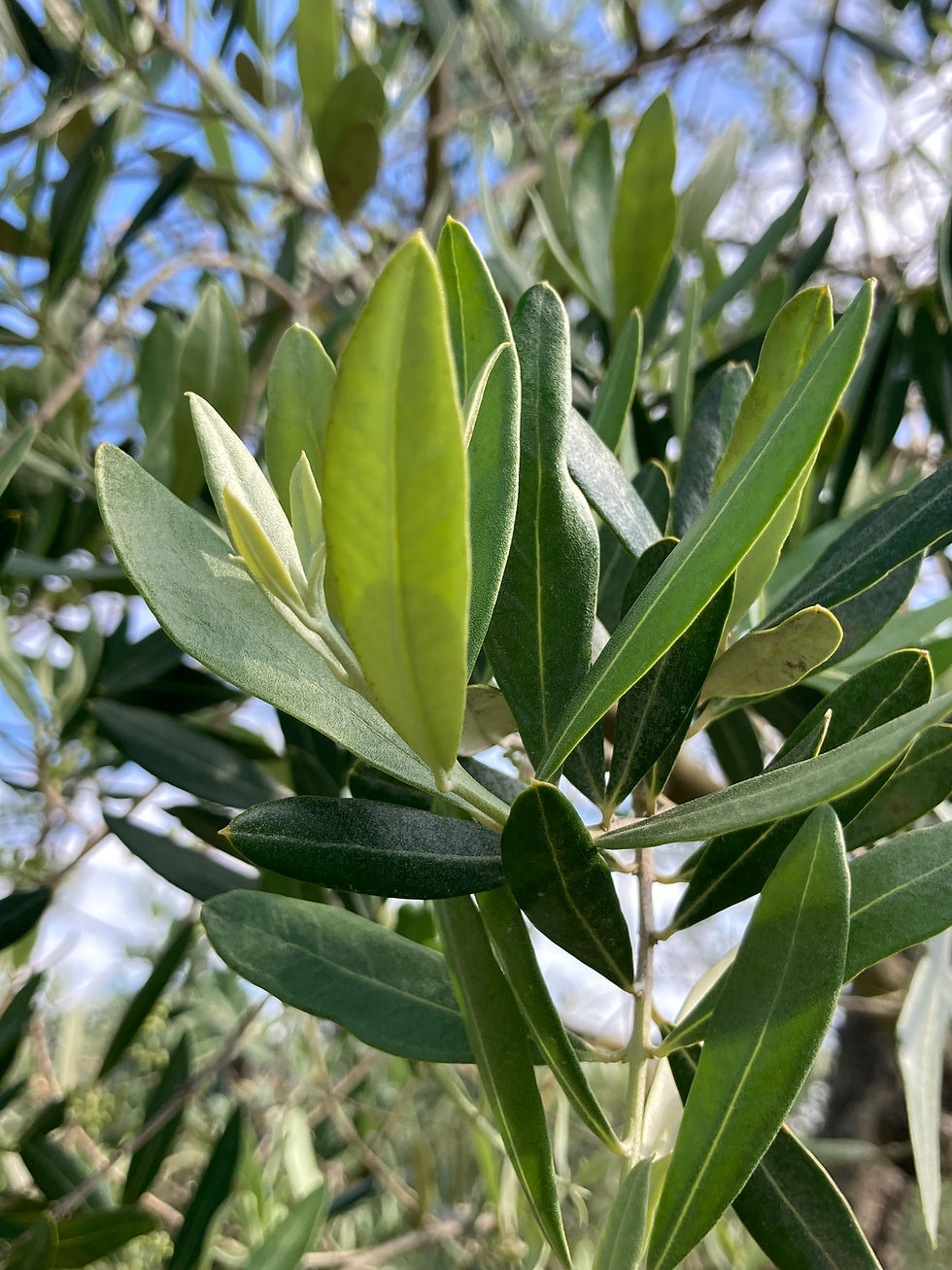
Oleander (Nerium oleander), is a resilient evergreen shrub that produces clusters of ruffled flowers in gorgeous pinks, whites, and reds. Because it’s poisonous, it’s not a healing herb: instead, it is appreciated as an ornamental hedge or privacy screen. It is vital to note that all parts of the oleander are highly toxic if ingested by humans or pets, so if your dog or cat likes to experiment and nibble, keep this one out.
The Tuscan Rose
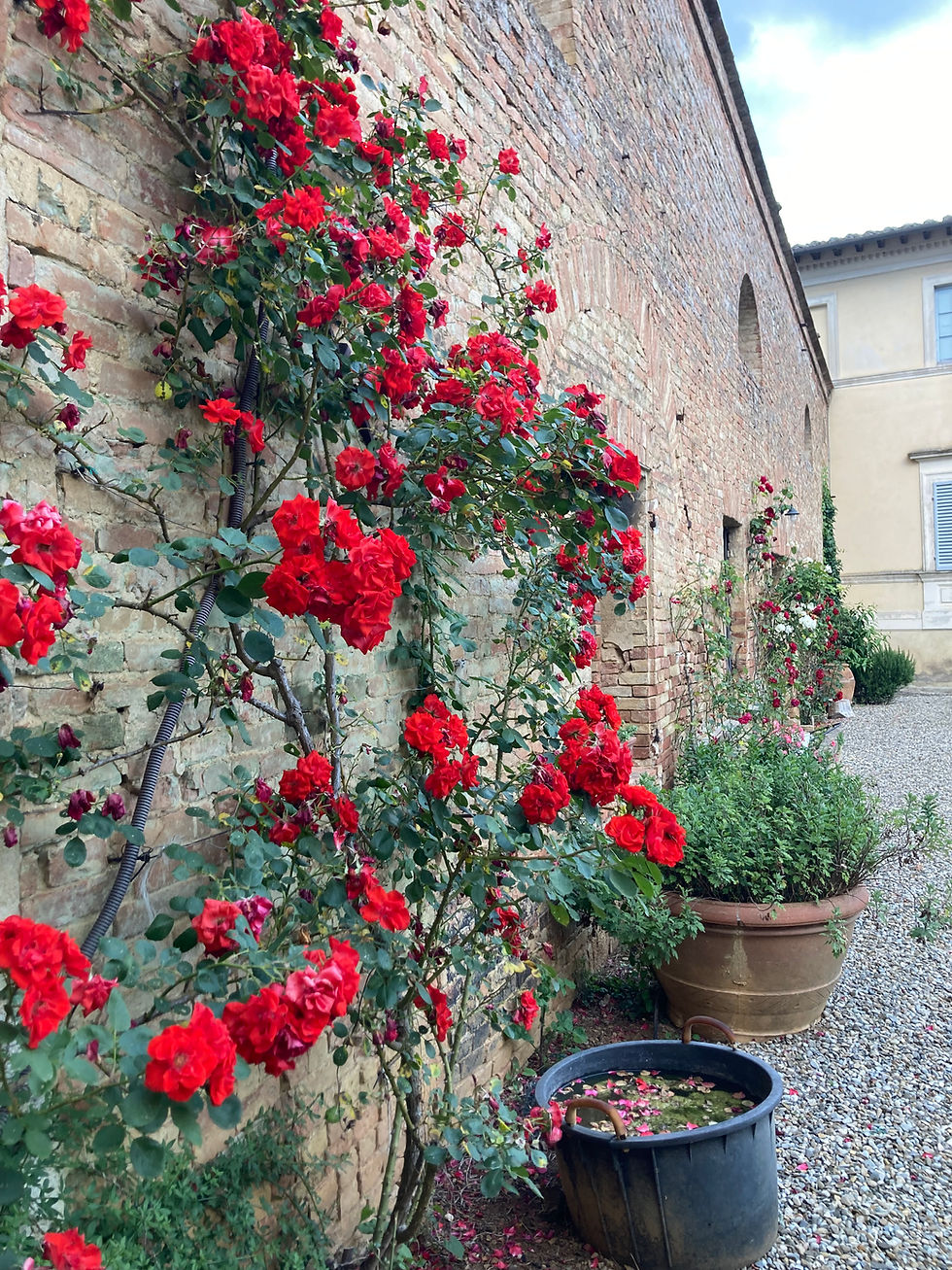
Did you know that, for centuries, traditional winemaking vineyards have planted rose bushes at the ends of their grape rows? It’s a symbolic gesture that invites fragrance into the art of winemaking. But it’s more than just aroma: in Tuscany, they are traditionally used as "sentinel plants" that alert the winemaker that something is wrong. Because roses are highly susceptible to powdery mildew, they act as an early-warning system for winemakers to protect their grapes.
This photo is from Villa Certano; it's one of the many dozens of decades-old still-fragrant rose plants grown on the estate. The Tuscan Rose does not refer to a single species; rather it's the many species that make up a colorful range of roses highly prized for their color and fragrance, not to mention their edible and medicinal qualities.
Helichrysum
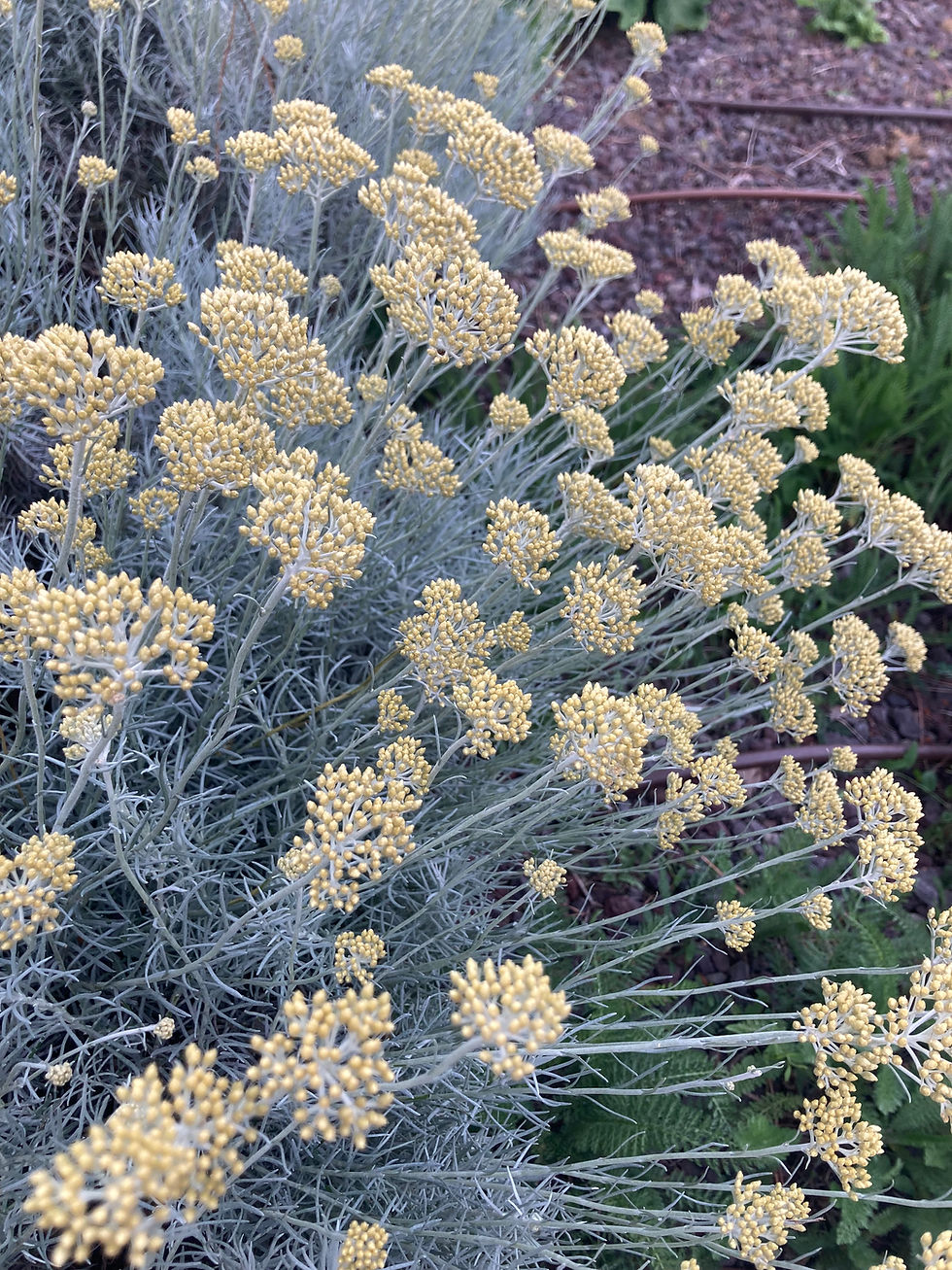
Known as the Curry Plant or "Immortelle," helichrysum (Helichrysum italicum) symbolically captures the golden sunshine of the Mediterranean. It smells incredible. Simply incredible. Sweet, spicy, enchanting… I could inhale helichrysum all day long. Its dense clusters of tiny, ball-shaped, golden-yellow flowers are used in aromatherapy to support a variety of emotional distress and mood, and it is valued in skincare. It also dries well and is used in wreaths.
Wild Garlic
The wide valleys spike with purple spires topped with globes of color and scent. These are wild garlic, Allium spp., growing pell-mell across this part of Italy. Both the flowers and the bulb are edible and form a staple in the Italian kitchen. Garlic, we all know, has many medicinal uses and is a favorite of mine for fighting bacterial infections, especially in the lungs.

Wild Oats
Wild Avena sativa and other species are our familiar oats. Were they planted here and raised as farm crops long ago, and they’ve spread or gone wild? I do not know, but they fill the fields along with the red clover, St. John’s wort, garlic, and other delicious and medicinal herbs we love. Squish the seed pods or fruits of Avena and they get milky; this is a way to confirm you’ve got the right plant. Many herbalists make infusions with the fruits or seeds; this is a strong water-based remedy otherwise known as a tea or tisane, and it tastes bland and green until you blend other herbs such as mint or lemon balm with it. It is revitalizing and nourishing, full of calcium and other minerals our bodies and brains need.

The International Herbal, Aromatherapy, and Plant-Lover's Retreat
Our herb walks during the Herbal Tuscany 2027 journey May 29 - June 11 will include these and many other herbs, edibles, medicinals, shrubs, ornamentals, hot-house plants, Mediterranean icons, and ancient trees as we visit farms, botanical gardens, university gardens, arboreta, essential oil production farms, and greenhouses—strolls and meanders that leave us nourished and inspired.


Comments